2nd October 2023
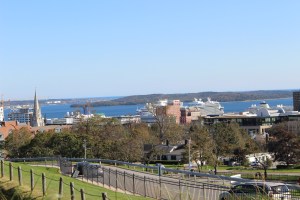
The clocks went forward an hour overnight, so we lost an hour’s sleep and didn’t make it down for breakfast until 8 a.m. The view from our cabin TV, via the ship’s bow camera, was promising: blue skies, a calm sea, little wind, and a temperature of 14 degrees Celsius. Definitely a shorts-and-T-shirt kind of day.
We hadn’t arranged any activities for this port of call. A month ago, we had decided to walk to Fairview Lawn Cemetery to visit the burial site of the Titanic victims and, if time allowed, explore the Halifax Citadel National Historic Site, a fort established in 1749 by the British to secure a foothold in Nova Scotia and counterbalance the French stronghold at Louisbourg.

With a disembarkation time of 11:30 a.m., we knew we’d be off the ship by lunchtime, so we made up a couple of cheese and ham rolls from breakfast to take with us. We were ashore by 11:10 a.m., joining fellow passengers from the Sky Princess and two other cruise ships as we marched along the quayside. Sue was keen to visit the more than a hundred graves of Titanic victims, and despite my protests that it was a long and rather dull walk, she was insistent. One of her ancestors, Bortham Crosbie, had been a Turkish bath attendant on board, and she wanted to see if he had a headstone.
As I’d predicted, it took exactly an hour and a half of steady walking through a patchwork of dreary retail, industrial, and residential areas. Several old-fashioned tour buses sped past us on their way to the same destination. Fortunately, it was a fine day with light traffic, and the walk gave us glimpses of parts of Halifax that most tourists never see, or perhaps wouldn’t want to. Several small parks we passed revealed a common but heart-rending sight in large cities around the world: small tented encampments of homeless people. Sad stories and a sobering view.

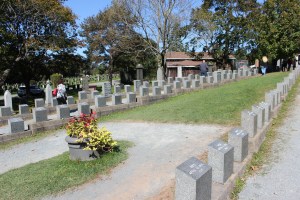
The graves lie in Fairview Lawn Cemetery, located in the North End of Halifax at the northern end of Windsor Street. One hundred and twenty-one victims of the RMS Titanic are buried here. Most are marked with small grey granite stones bearing their names and dates of death. Some families had larger, more elaborate markers erected with additional inscriptions. However, around a third of the graves belong to unidentified victims, their markers simply engraved with the date of death and a plot number.
When we arrived at this large, well-kept cemetery, there were tourists from several tour buses gathered around the graves. As far as the eye could see, the headstones were predominantly large, polished granite slabs etched with details of the deceased. We lingered for about an hour; Sue searched in vain for Bortham Crosbie’s name, read the information boards, and we enjoyed our picnic rolls while sitting on a convenient bench. Tour buses and taxis seemed to arrive in a steady stream, with visitors listening to guides, taking photos, and spending quiet moments in reflection. Perhaps Bortham rests in one of the unknown plots, or maybe he was one of the many who were recovered but given a burial at sea by the ships sent out by the White Star Line.
We weren’t looking forward to the return trek, but spotting a bus stop outside the cemetery where a couple was waiting, we asked if their bus went near the Halifax Citadel National Historic Site. It did. The bus arrived shortly after, and for $2.40 each, we were dropped off about a quarter of a mile from our next destination.

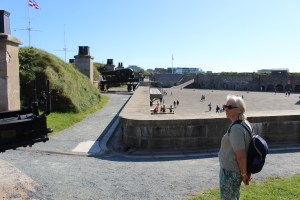
The fort, perched atop Citadel Hill, the highest point in the city, was accessed by a very steep and exhausting path, which made it easy to understand why the French or Americans never dared attempt an attack. Since the city’s founding by the English in 1749, four fortifications have been built on Citadel Hill, all commonly referred to as Fort George. However, only the third fort, constructed between 1794 and 1800, was officially named Fort George.
After paying the $7 entrance fee, we made our way through a door at the rear of the bastion, which opened into a tunnel leading us into a vast courtyard. To one side stood a large building, whose rooms now house a variety of artefacts and displays relating to the history of the fort.
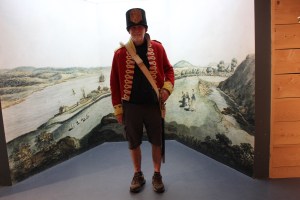
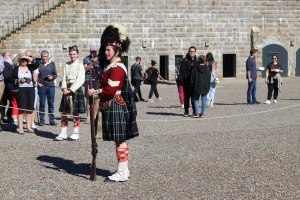
Set into the walls of the internal defence ramparts were further rooms dedicated to their original use during the 1800s and 1900s. Staff members dressed in period military uniforms went about their duties, sharing the history of the fort with visitors who showed an interest. We watched a lively demonstration of muskets being fired, followed by a detailed explanation of the weapon’s type and its evolution over time.
There were numerous interactive displays that would easily have taken far longer than the couple of hours we spent there. Anyone with an interest in Canadian or military history could quite happily spend a full day immersing themselves in the atmosphere and stories of the past. We took plenty of photos, I donned a redcoat uniform, and we enjoyed several of the more accessible activities.
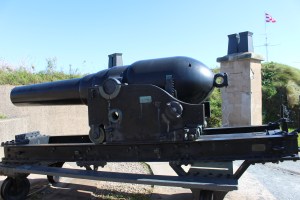
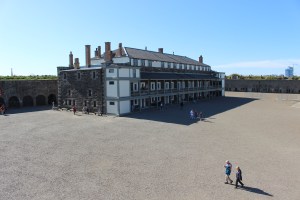
With sore feet, we made our way down from the Citadel into the city, navigating a few busy streets before reaching the boardwalk, described as one of the city’s most bustling hotspots. Stretching an impressive 4 kilometres (2.5 miles) along the waterfront, it is one of the world’s longest urban boardwalks, running from Pier 21 at the Halifax Seaport all the way to Casino Nova Scotia.
Situated along the lively harbourfront, we joined a throng of people, mostly passengers from the three cruise ships in port that day, making our way back to the Sky Princess. On the seaward side of the boardwalk sat the ferry terminal, various boat tour operators, and a number of historic ships moored alongside, representing a range of different eras.
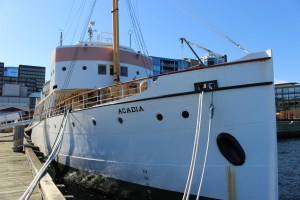

On the landward side of the boardwalk were shops, restaurants, seafood and burger bars, and children’s playgrounds. It would be easy to spend an entire day enjoying all the facilities the boardwalk offers, but our only thought was to rest our weary legs and sip a refreshing, and very, very cold, drink.
That evening, we were entertained by a very funny comedian from Liverpool named John Evans. His wit and humour sent us to bed with smiles and grins firmly in place.


Leave a Reply